AI at Sea: The Digital Wave Transforming Maritime Industries
November 6, 2025
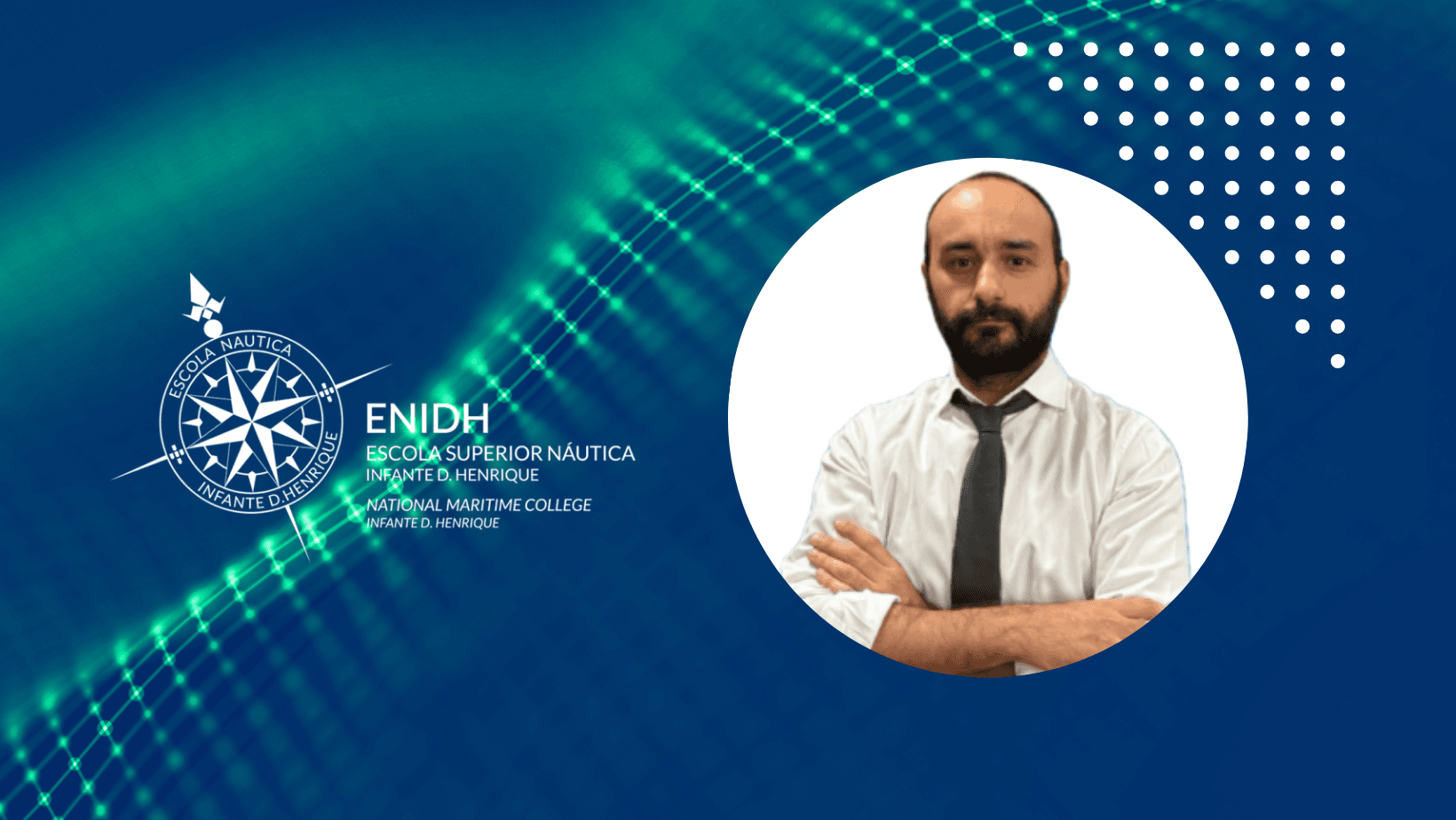
As AI and automation reshape global transport, the maritime sector sails into a digital era where cybersecurity and data-driven efficiency are essential. In this article, Ricardo Póvoa, Research Coordinator at Escola Superior Náutica Infante D. Henrique (ENIDH), explores how technology and collaboration are redefining the future of a secure and smart blue economy.
How are maritime sectors integrating AI and automation?
When Gary Kasparov defeated IBM’s Deep Blue supercomputer in 1996, the world rejoiced in relief with human’s mind superiority, but it became clear that automation and Artificial Intelligence (AI) would matter crosswise in the new century. In 1997, the rejoice, because supercomputers are human creations, preceded a fear of replacement. In 2025, calculators and simulators are tools for efficiency in academia and productivity in industry. AI is used in technology design, data analysis and security. Why should it not be in shipping? It is. Force Technology has solutions in hull design, Tecnoveritas in fleet management, and Hapag-Lloyd in digital twins.
The Two Pillars of Digital Transformation in Shipping
To understand digitalization in shipping today, it is essential to consider two interconnected pillars:
• Security
• Economy
Cybersecurity at Sea: A Growing Priority for the Maritime Sector
Regarding security, the International Maritime Organization (IMO) has placed cybersecurity as a top priority since 2017, a year particularly plagued by attacks on the sector.
In fact, in 2017, the Maritime Safety Commission published a circular with guidelines for cyber risk management. A document that served as the foundation for publishing the book on security awareness training for port personnel with designated security duties (2018 IMO Model Course 3.24) and has undergone consecutive revisions (the latest from April of 2025), demonstrating true concern towards this issue.
Furthermore, this document inspired a resolution also in 2017, which placed cybersecurity as a mandatory requirement in the Security Management System of the International Security Management Code (ISM Code).
Thus, IMO has given this topic great importance, and it is likely that the inclusion of cybersecurity in all IMO Model Courses will be soon. It is also believable that the International Convention on Standards of Training, Certification and Watchkeeping for Seafarers (STCW) certifications applied to cybersecurity will emerge very soon, since piracy isn't merely a matter of gangs boarding ships in the dark: the danger of cyberspace is real, and potentially presents even greater hazards, for crews and cargo.
Digital Efficiency and Economic Resilience: The Case for Smart Ports
Economy and the digitalization of the maritime sector are synonymous. There is no economy without the maritime sector: it is about the transportation of people, goods, assets, lives, and life projects. The digital transition is an inevitable reality today, and the maritime sector must be at the forefront, not only because it is important in shipping in general, but in port administrations particularly. Secure digitalization of processes and procedures is key to ensuring efficiency and resilience in the face of instability and responding quickly to challenges that usually affect management, logistics, and transportation.
Much is being done in Portugal. A prime example is the Single Logistics Window, a digital platform that centralizes processes from navigation to port registration and continental transportation. A European integrated framework is essential for the future of intermodality as a central paradigm of the global supply chain.
3 Technologies Driving the Future of Maritime Digitalization
The future of digitalization in the maritime sector must consider three main lines:
• Machine learning to maximize efficiency and productivity;
• Data analysis and big data science for decision support;
• Cybersecurity above all, as security has always been human’s number one concern.
Case Study: Monitraffic – Smarter Monitoring for Safer Coasts
Monitraffic, a joint venture project funded by Fundo Azul, Instituto Superior Técnico, Escola Superior Náutica Infante D. Henrique and Xsealence, is a good integration example of the above three main lines.
Monitraffic’s objective was an integrated system for the characterization, monitoring, and surveillance of maritime traffic off the Portuguese mainland coast, including in port areas, through the development of tools for characterizing routes and operational profiles of maritime traffic, as well as for automatically detecting abnormal behavior of merchant ships and fishing vessels. The system aimed at providing information on typical ship routes to increase the safety and efficiency of current maritime operations, enabling future operations with autonomous vessels, and providing alerts of anomalous situations to support the monitoring and control of coastal and port maritime traffic.
The generation of vessel databases and performance and route history goes beyond standard monitoring solutions, offering security challenges that require attention and proper mitigation.
Case Study: SEMS4USV – Smart Energy Management for Unmanned Vessels
Another good example comes from the European Border and Coast Guard Agency’s award winning SEMS4USV project that once again joined Instituto Superior Técnico and Escola Superior Náutica Infante D. Henrique in 2024.
This project aimed at the delivery of a smart energy management system, supported by intelligent mission path planning, applied to an in-house designed unmanned surface vehicle (USV). USVs are used for border surveillance, biological and geological marine studies, and vessel defensive support.
Skills and Systems: What’s Needed to Support a Secure Blue Economy
The vision of a secure global economy, provided by the maritime sector, can only be achieved with an effort of both academia and industry, joining ventures with common goals, if supported by governments that, while recognizing the challenges and the importance of these matters, must also deliver real action. This includes taking concrete measures to mitigate potential hazards, by supporting blue economy academic courses, post-graduations and training that ally general computer science knowledge to maritime and shipping know-how, with maritime information systems serving as a good example of this integration.
It is crucial not to overlook these matters, as it is widely known that port administrations are facing challenges in the digital transition, one being the lack of human resources in a competitive and interconnected world.
Embracing Change: Why Collaboration is Key for a Smarter Maritime Future
Disruption often brings unwelcome change. Changes raise questions, questions raise distrust, and the unknown is usually uninviting. Challenges, however, bring solutions that arise when humans agree that something is needed and everybody counts towards a common future. Automation and AI are in the maritime sector as tools for efficiency and productivity, development and decision support, while security must come first. The integration between computer science knowledge and maritime know-how must be encouraged by academia, industry and governments, so the right questions can be asked, correct answers can be acknowledged, and the best decisions are made, aided by secure real-time database systems.

Fórum Oceano is the managing entity of the Portuguese Sea Cluster, certified and recognised by the Ministry of Economy and the Sea, the Ministry of National Defence and the Ministry of Planning and Infrastructure.
With the support of

© 2026 Fórum Oceano. All rights reserved. Developed by Yacooba Labs