Wrap-up of the NODC-PT Best Practices Webinars
February 6, 2026
Sessions focused on capacity building and best practices
- Creation and management of metadata, highlighting its relevance, impact, and role in information reuse;
- Access, integration, and use of marine geospatial data;
- Use of ocean data in GIS environments;
- Interoperability between systems and platforms;
- Efficiency in the management and reuse of marine information.
Key highlights
Results and impact
- Sharing of technical knowledge;
- Clarification of best practices;
- Active engagement of participants;
- Strengthening the link between marine data producers and users.
Enhance the Use of Marine Data with NODC-PT
The National Oceanographic Data Centre – NODC-PT is a national infrastructure that coordinates, enhances, and promotes access to marine data in Portugal. As a national community, it connects marine data producers and managers, fostering an integrated, collaborative approach aligned with national and international best practices.

Webinar Big Data Platform NODC-PT
The Portuguese Institute for the Sea and Atmosphere (IPMA) and the Hydrographic Institute of the Portuguese Navy are organising, within the framework of the Portugal Blue Digital Hub (PBDH) project, the NODC-PT Big Data Platform Best Practices Webinar, an initiative dedicated to knowledge sharing and strengthening collaboration around this national ocean data infrastructure.
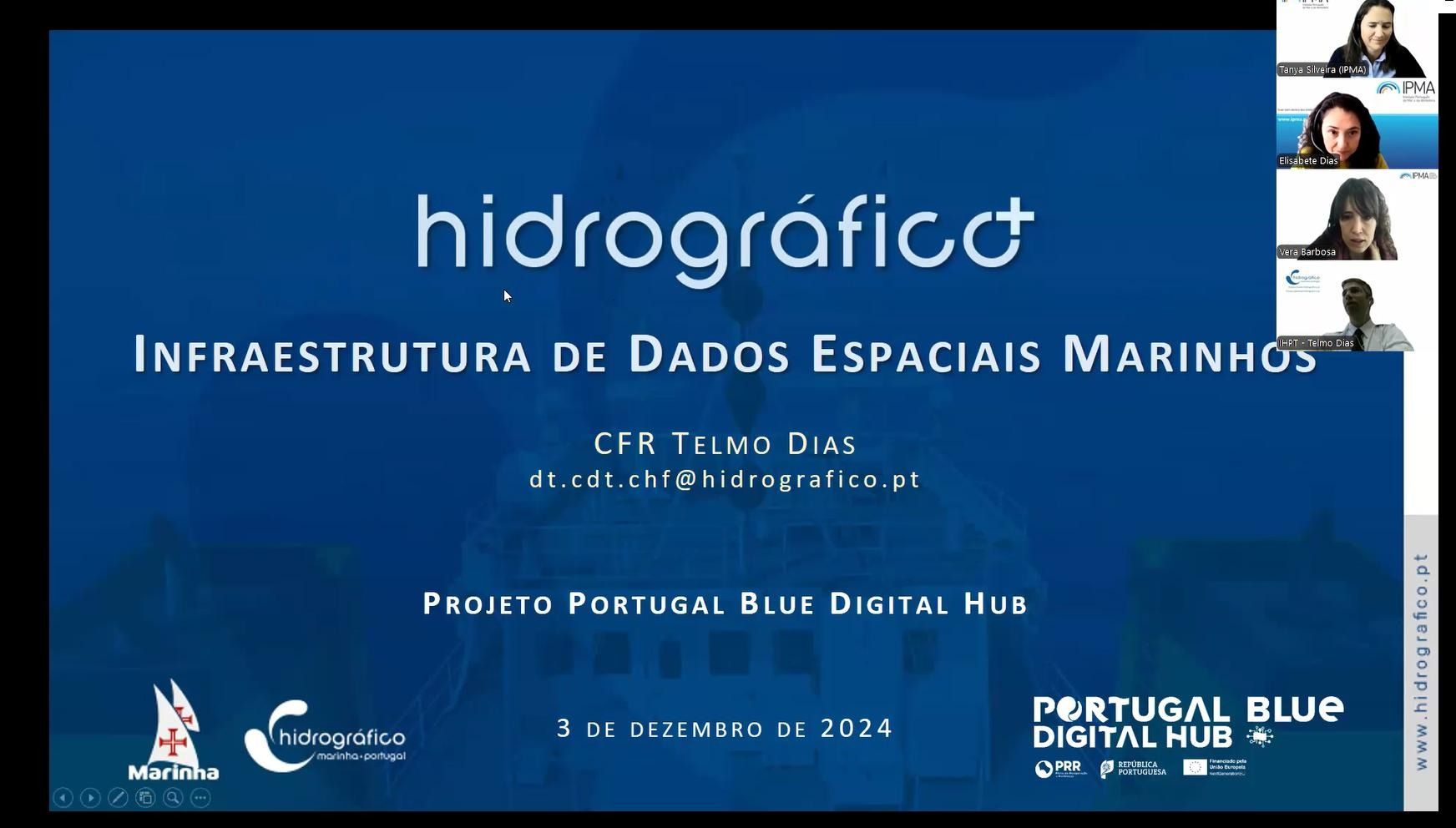
Webinar to present the National Oceanographic Data Centre of Portugal (NODC-PT)
On 3 December, a webinar was held to present the National Oceanographic Data Centre of Portugal (NODC-PT), an initiative promoted as part of the PBDH project.