Rethinking Cooperation in the Blue Economy: Why Protocols Alone Aren’t Enough
July 27, 2025
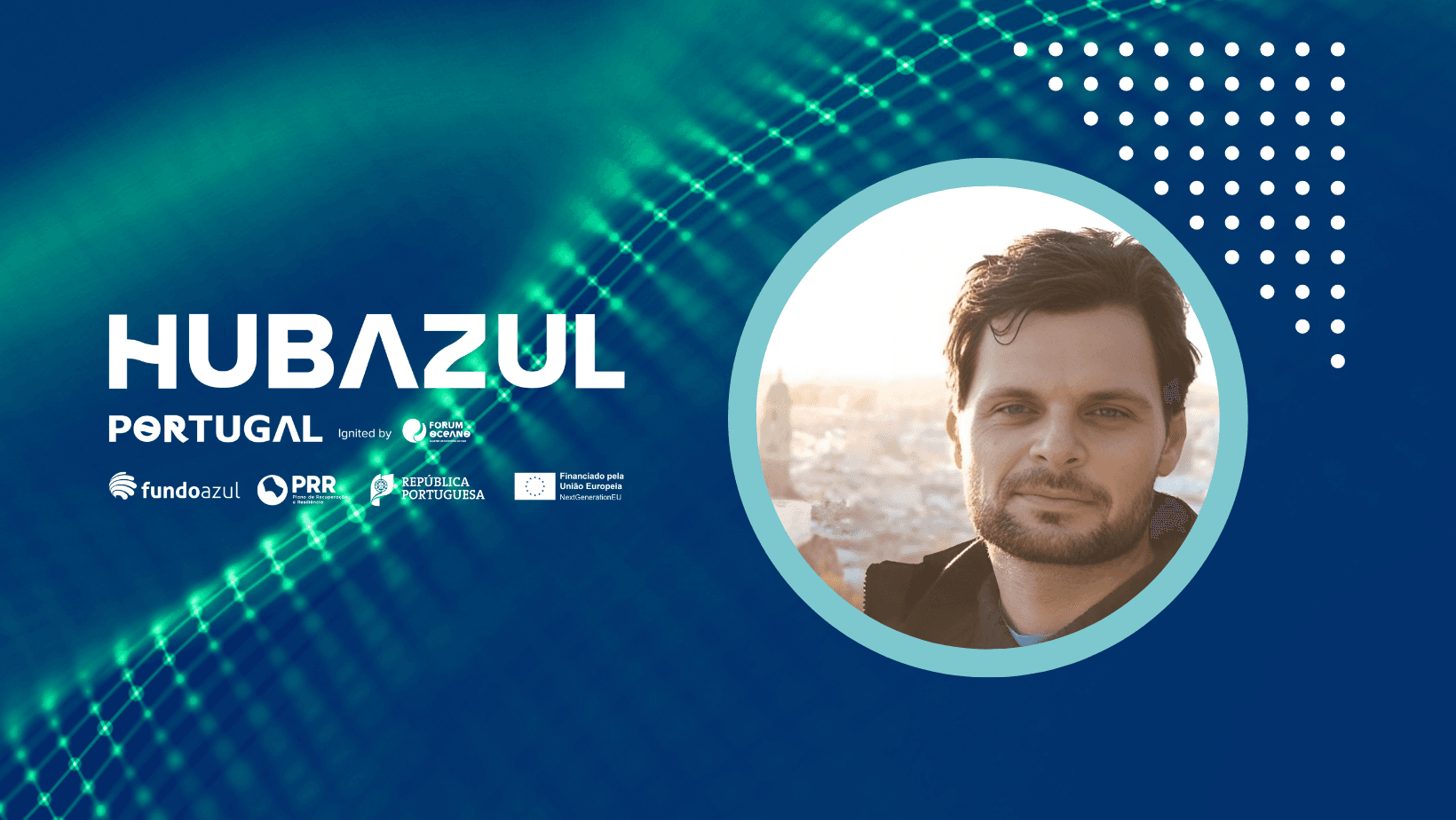
by Manuel Melo, Innovation Manager, Hub Azul Portugal
The Blue Economy holds vast potential for sustainable growth, but realizing that promise demands more than just protocols and good intentions. In this thought-provoking piece, Manuel Melo explores why traditional forms of cooperation often fail to keep pace with the sector’s complexity. From regulatory delays to shifting market signals, he outlines the systemic barriers that stall progress—and argues for a deeper, more agile approach to collaboration that goes beyond formal agreements.
The Blue Economy is full of promise—but also of friction. From floating offshore wind farms to green fuel bunkering infrastructure or onshore aquaculture ventures, the sectors involved are often navigating immense technological, regulatory, and financial uncertainty.
This uncertainty makes long-term strategic planning difficult. Testing is slow and expensive. Licensing is unpredictable. Market dynamics and expectations shift constantly. Supply chains face frequent and unpredictable bottlenecks. As a result, many companies and institutions adopt a “wait-and-see” stance, delaying the innovation and investment the sector desperately needs.
In this context, cooperation seems like an obvious answer. But in practice, the way we cooperate often falls short.
When Protocols Become Paperwork
Formal cooperation mechanisms—memorandums of understanding (MOUs), protocols, strategic alliances—are everywhere in the Blue Economy. Leading research centers may hold over a hundred partnerships simultaneously, while clusters like Fórum Oceano regularly facilitate inter-institutional multilateral collaboration.
At face value, this looks like progress. But many of these agreements don’t live up to their potential.
In their report on alliance evolution, Madhok et al (2015) report strategic alliance failure rates often exceeding 50%, and Hughes and Weiss (2007) place failure rates at around 60% - 70%. One can aptly say that, in many cases, the success of a partnership can be a coin flip. And that is not a good enough probability for companies to place their bets on cooperation.
In practical terms, stakeholders often feel that protocols have become bureaucratic exercises rather than tools for value creation. When results don’t materialize, internal champions lose faith. Some become openly resistant to future cooperation efforts, viewing them as symbolic, time-consuming, and ultimately useless.
This disillusionment is dangerous. When the people tasked with enabling collaboration become skeptics, the entire ecosystem suffers.
The Root Problem: Missing the Foundations of Good Partnerships
Why do so many partnerships in the Blue Economy underperform?
While each failed collaboration has its own story—overly ambitious timelines, lack of leadership, unclear deliverables—many fall short for a more fundamental reason: they weren’t designed with real cooperation in mind.
Scholars like Dwyer et al. (1987) emphasized the importance of the “awareness” and “exploration” phases of partnerships. This is the phase where entities should evaluate not only what they want to do together—but whether they should cooperate at all, and how.
In this early phase, two often-overlooked concepts become essential: Complementarity and Compatibility.
Complementarity: The Engine of Mutual Value
Complementarity refers to how well each partner’s resources, knowledge, or assets complete what the other lacks. This isn’t about having the same tools — it’s about combining different strengths to build something new.
As an example, Muthoka et al (2019) found evidence “that shows that the resources accumulated through strategic alliances can boost the performance of resource-restricted firms” for Kenya’s manufacturing SMEs.
In contrast, alliances with overlapping capabilities often dissolved quickly. Partners struggled with unclear value exchange and competition for the same roles. The result? Misalignment, frustration, and eventual disengagement.
In the Blue Economy, this means clearly identifying what each partner brings to the table—unique technologies, market access, data sets, capabilities—and mapping how those puzzle pieces can fit together before any protocol is signed.
Compatibility: The Cultural Glue That Holds Partnerships Together
Even when resources align perfectly, cooperation can falter if operating cultures don’t.
Compatibility refers to how well the partners’ internal norms, communication styles, and decision-making processes align. It’s the difference between a partnership that flows and one that constantly needs translation—metaphorically and literally.
Murray and Kotabe (2004) argue “that the proper coalignment of alliance attributes and forms enhances performance.” Or in other words, if social relationships have an impact on inter-firm relations, in that they foster trust, then the ability to foster them is a critical success factor for inter-firm cooperation.
Cultural misalignment, on the other hand, increases coordination costs and slows down execution. In an ecosystem as complex and uncertain as the Blue Economy, those delays can be fatal.
Moving Forward: Smarter, Not More, Cooperation
The takeaway isn’t that protocols are useless. It’s that they’re too often used without the foundational work that makes them effective.
Instead of rushing to formalize cooperation, entities should invest time in evaluating complementarity and compatibility—the twin pillars of sustainable collaboration. This early-stage analysis helps avoid the disillusionment that threatens the entire cooperative culture.
Because the cost of failure isn’t just a wasted opportunity. It’s the erosion of trust. And trust is the most valuable—and fragile—currency in an emerging ecosystem.
The Blue Economy doesn’t need more protocols. It needs better ones.

Fórum Oceano is the managing entity of the Portuguese Sea Cluster, certified and recognised by the Ministry of Economy and the Sea, the Ministry of National Defence and the Ministry of Planning and Infrastructure.
With the support of

© 2026 Fórum Oceano. All rights reserved. Developed by Yacooba Labs